What to Look for in a Responsible Kooiker Breeder
A responsible breeder will always ensure the physical and mental health and welfare of the animals in their care.
Health and Welfare
Responsible breeders want to improve the breed and will seek out the best possible dam and sire combination with regard to health, structure, type and temperament. They can provide a three to five generation pedigree, and have information about any known health or temperament issues in that pedigree. Their knowledge about individual pedigrees and the desired results should be the foundation of the choice of the breeding combination they used. They can also use the program Fit-2-Breed of the University of Utrecht, where information about genetic diversity can contribute significant additional knowledge.
Responsible breeders make every possible effort to ensure that the dogs they use for breeding are healthy and free of known genetic and hereditary disorders. They are willing to provide proof that both the sire and dam have their health clearances (the current testing required for Kooikers involves checking for hip dysplasia, patella luxation, eye health, von Willebrand’s Disease, and Hereditary Necrotising Myelopathy and Polymyositis). Prior to breeding, breeders must submit the results of these tests to the Orthopedic Foundations for Animal (OFA)’s registration program Canine Health Information Centre (CHIC) to obtain a CHIC number. All of the required tests listed above, with the exception of Polymyositis, are required to obtain a CHIC number. When a breeder gives you the CHIC numbers of the parents you can access these testing results on line at https://ofa.org/chic-programs/.
Responsible breeders raise pups as part of the household, so they will be properly socialized to normal daily activities and noises. They will also provide an enriched environment for their development. Pups should be carefully introduced to other animals, people, and objects they expect to be exposed to in their future life. Many breeders use programs like “Puppy Culture” or “Avidog” to help socialize the puppies to stimuli at the correct point in the puppies development.
Responsible breeders observe and document behaviour of their litters, and get to know the individual characteristics and temperament of the pups. They will evaluate the temperaments of the puppies in the litter. They will also ask you about your lifestyle, activity level and preferences. They will then be able to match potential puppy buyers to the best puppy in the litter that will fit their lifestyle and future plans. You can trust a Responsible breeder to pick your puppy for you.
Responsible breeders will have their pups checked by a veterinarian prior to placement. A documented full health examination, first vaccinations, and permanent identification with a microchip or a tattoo are expected. Pups should have been regularly dewormed prior to going to their new homes.
Puppy Placement
Responsible breeders are emotionally invested in their pups and know that the process of placing a pup with a new owner in exchange for a fee charged is not so much “selling” a puppy… it is really an adoption for the pup’s life. Their goal is to find the best possible home for each puppy.
Just like you should be able to ask your breeder many questions about the above-mentioned subjects, Responsible breeders will interview and consider prospective new homes and owners very carefully. They will ask many questions about you, your activity level, your home and family. They will want to get to know you. They will ask what your plans are for this puppy. Your answers to these questions will help them to determine which of their pups will be a Responsible fit. A breeder always has the right to refuse a prospective buyer a puppy.
Responsible breeders will talk to you about feeding, training and care of your puppy, and will be available to you to answer questions after the puppy goes home with you. Responsible breeders are there for you, for the life of your dog, for advice, support, and encouragement. They often request to be kept updated for the life of the puppy.
If for any reason you can’t keep your dog, a responsible breeder will ask that you inform them so they may help with rehoming or potentially bring your dog back into their home.
The Paperwork
Responsible breeders register their dogs with the Canadian Kennel Club (CKC) or the national Kennel Club of the country they live in. These organizations are registries that track the pedigrees of purebred dogs and strive to ensure that each dog registered is a recognised, distinct breed of dog. When selling a pup/dog, they will not charge an additional fee to provide you with the registration papers.
Responsible breeders are members of their regional and/or national breed club. Membership in a breed club helps a Responsible breeder stay abreast of events and issues that may affect their breed. Participating in club activities and events keeps a Responsible breeder connected with other Responsible breeders so important information about health, nutrition, training, etc. can be shared.
Responsible breeders follow their national breed club’s Code of Ethics (COE) and health testing guidelines.
When selling a pup/dog, responsible breeders will offer a contract that includes health guarantees and a reasonable period of time to have the pup/dog examined by a veterinarian after purchase. The contract often states if the dog can be used as a breeding animal, or instead may include a non-breeding clause, or a requirement to spay or neuter the pet by a certain age. The contract should also clearly state under what circumstances the (potential) initial deposit is refundable.
Other Activities
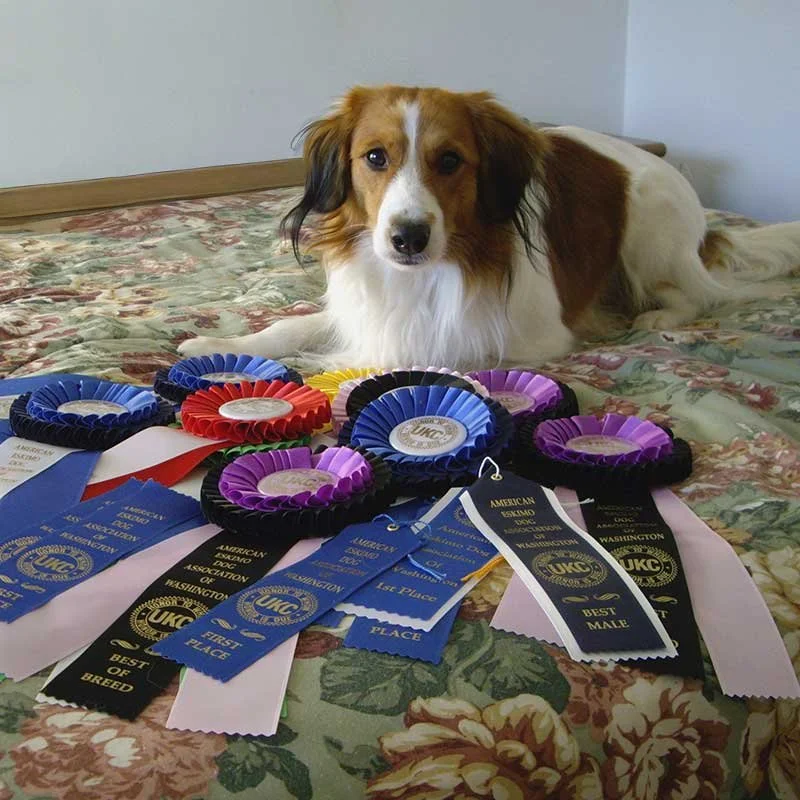
Many responsible breeders show and title their dogs before breeding them. It is important to demonstrate the dog conforms to the breed standard. Earning a championship in conformation by competing in dog shows is one way to do that. A dog who earns his championship has correct conformation, has been socialized and can usually adapt well to crowds, noise, and other dogs. A commitment to the process of earning a championship also indicates a breeder’s level of belief and vested interest in an individual dog.
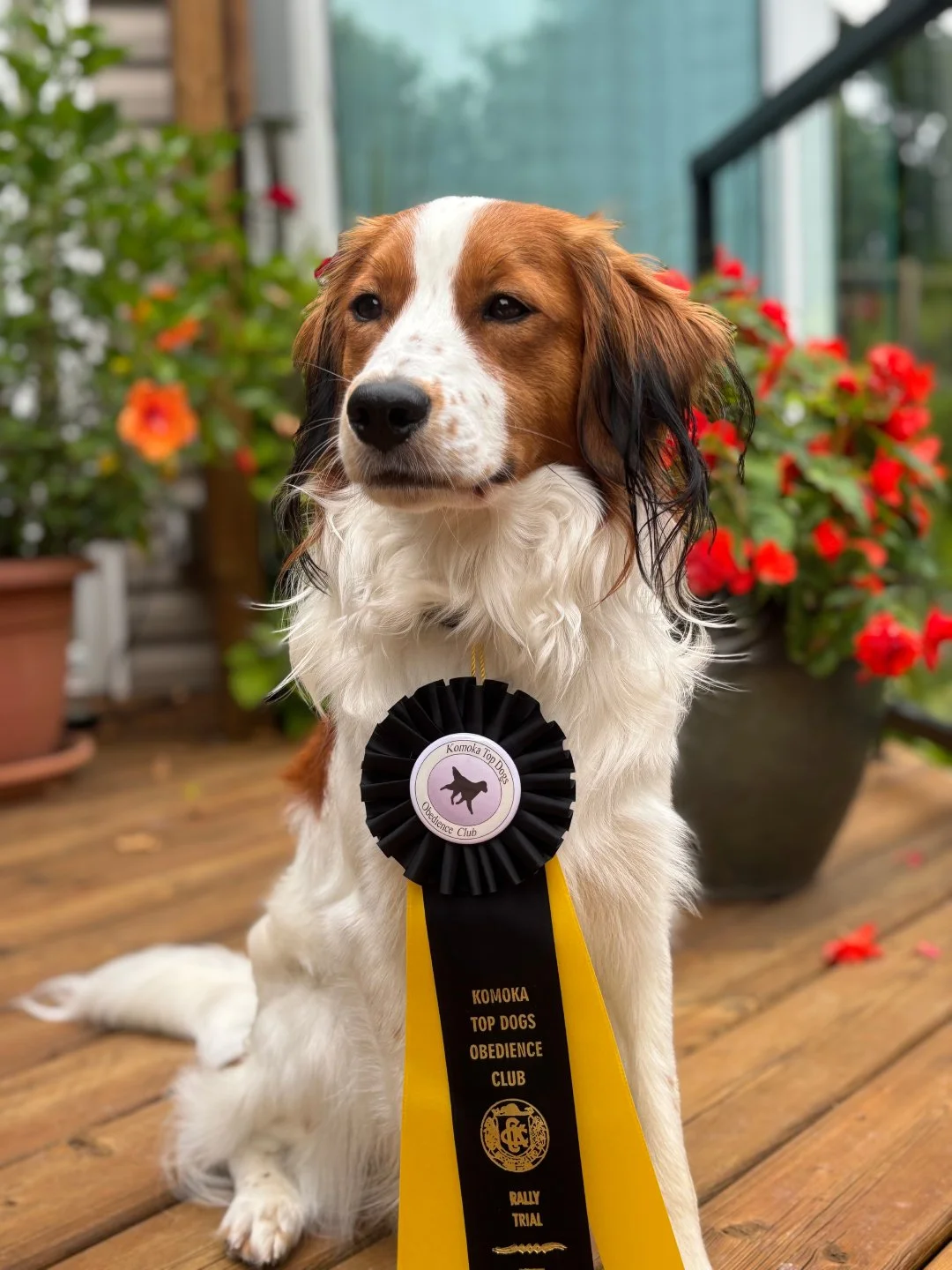
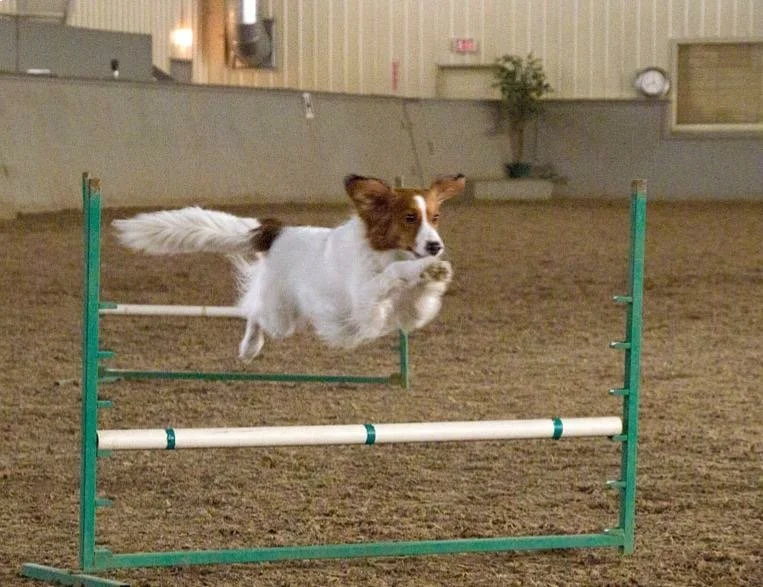
Many responsible breeders also enjoy working with their dogs and compete in companion events. Intelligence, athletic ability, cooperation, responsiveness and sociability can be demonstrated by participating in events like obedience, rally, agility, tracking, sprinters, dock diving, canicross, scent work, barn hunt, etc.
A responsible breeder may choose to use a sire or dam that does not have its championship or any titles as long as the dog has the qualities expected from a Nederlandse Kooikerhondje. Some breeders may choose to use a dog that does not 100% conform to the breed standard because the animal has traits or genetics that are beneficial to the future of the breed. Every breeder must be able to defend their choices.
Your Role
It is up to you to do your research and ensure you are dealing with a responsible breeder to maintain the integrity, performance and genetic diversity of the breed. Buying a Nederlandse Kooikerhondje from a responsible breeder may be expensive, but the time and effort put into producing exceptional puppies is worth it.